AI Search Engine Optimization Guide for 2026
Master AI search engine optimization for ChatGPT, Gemini & Perplexity. Learn proven strategies, best practices & tools to dominate AI search in 2026. Discover.
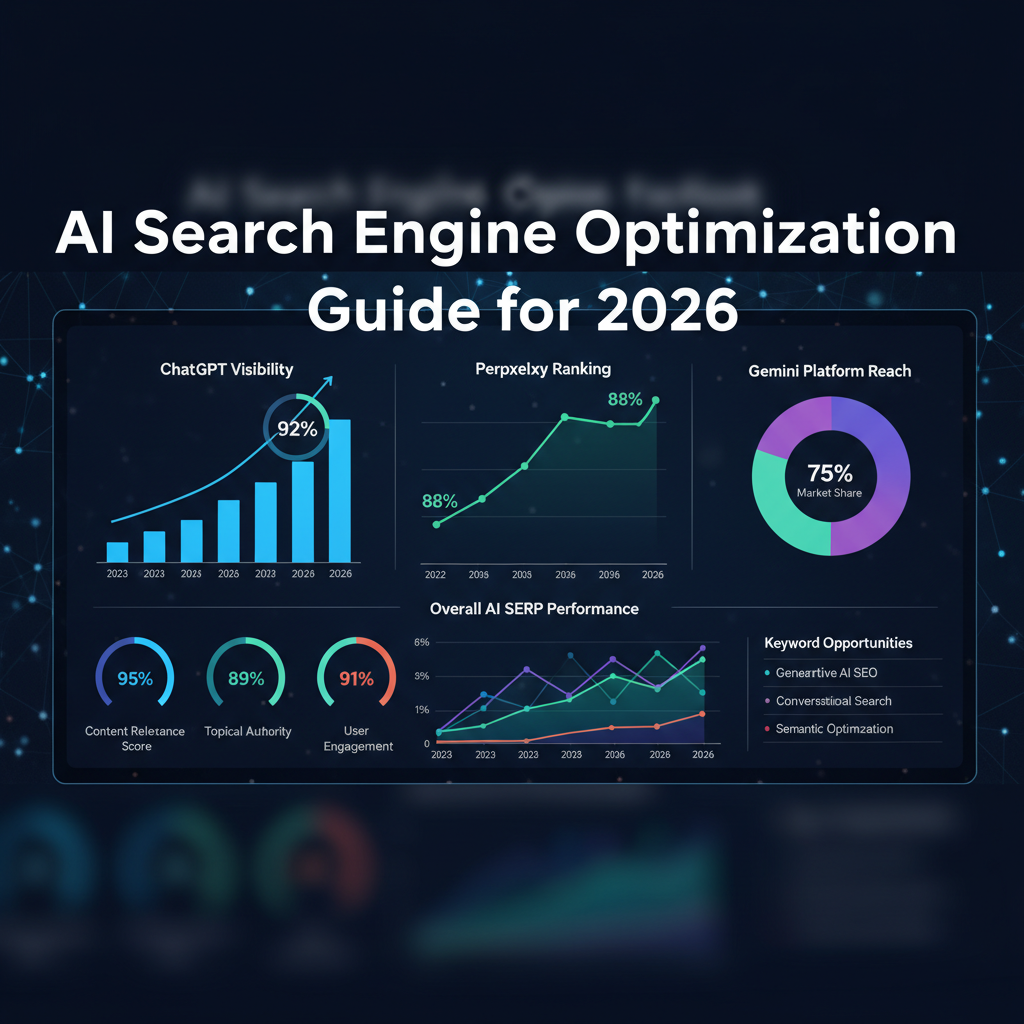
Key Takeaways
| Key Insight | Explanation |
|---|---|
| AI Search Revolution | AI search engines like ChatGPT and Perplexity are fundamentally changing how users find information |
| Content Optimization | Structured, citation-rich content performs best in AI search results |
| Technical Implementation | Schema markup and proper data formatting are crucial for AI visibility |
| Competitive Advantage | Early adoption of AI search optimization provides significant market advantages |
| Measurement Strategy | Tracking AI search visibility requires specialized tools and metrics |
What Is AI Search Engine Optimization?
AI search engine optimization is the practice of optimizing digital content and websites to improve visibility and rankings in AI-powered search platforms and generative search engines. This emerging discipline focuses on how large language models (LLMs) understand, process, and cite content when generating responses to user queries [2].Core Components of AI Search Optimization
Unlike traditional SEO that targets specific keywords and search algorithms, AI search optimization encompasses several distinct elements:- Semantic content structure: Creating content that AI systems can easily parse and understand contextually
- Citation optimization: Ensuring your content becomes a trusted source that AI engines reference
- Entity recognition: Helping AI systems identify and categorize your brand, products, and expertise areas
- Conversational query targeting: Optimizing for natural language questions rather than keyword phrases
- Authority building: Establishing credibility through structured data and authoritative backlinks
The Shift from Traditional SEO
Traditional search engines present users with a list of links to explore, while AI search engines provide direct answers synthesized from multiple sources. This fundamental difference means that being "found" in AI search often means being cited or referenced within an AI-generated response rather than appearing as a clickable result [3]. Research from Harvard indicates that AI-powered search optimization requires a more holistic approach to content creation, focusing on expertise, authoritativeness, and trustworthiness (E-A-T) signals that AI systems can recognize and validate [4].Pro Tip: Start tracking your brand mentions across AI platforms now. Many businesses don't realize they're already being referenced in AI responses, missing opportunities to optimize their visibility.
How AI Search Engine Optimization Works
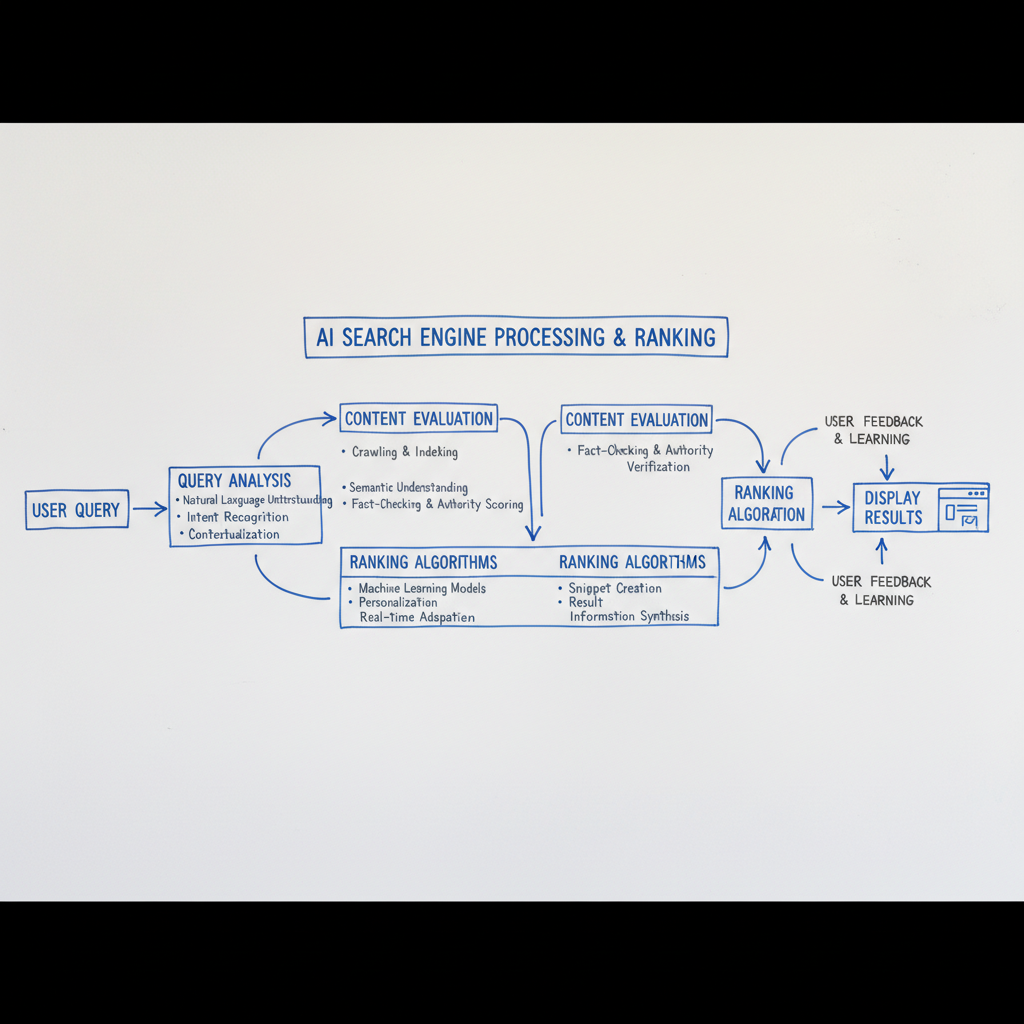
AI search engines operate fundamentally differently from traditional search platforms, using advanced natural language processing and machine learning algorithms to understand user intent and generate contextually relevant responses.The AI Search Process
When a user submits a query to an AI search engine, the system follows a sophisticated process:- Query analysis: The AI interprets the user's intent, context, and desired outcome
- Knowledge retrieval: The system searches its training data and real-time sources for relevant information
- Source evaluation: Content is assessed for accuracy, authority, and relevance
- Response synthesis: The AI generates a comprehensive answer, often citing multiple sources
- Continuous learning: User interactions help refine future responses
Content Ranking Factors in AI Search
AI search engines evaluate content based on different criteria than traditional search algorithms. Key ranking factors include:| Ranking Factor | Importance | Implementation |
|---|---|---|
| Content Authority | Very High | Expert authorship, citations, credentials |
| Semantic Relevance | High | Topic modeling, entity relationships |
| Content Freshness | High | Regular updates, current data |
| Structural Clarity | Medium | Schema markup, clear formatting |
Technical Infrastructure Requirements
Successful AI search optimization requires specific technical implementations that help AI systems understand and process your content effectively. The foundation includes proper schema markup, structured data implementation, and citation formatting that AI engines can parse automatically [5]. At Moonrank, we've found that businesses implementing comprehensive technical optimization see significantly higher citation rates across AI platforms within 30-60 days of implementation.Pro Tip: Implement JSON-LD structured data for your key pages. AI search engines rely heavily on structured data to understand content context and relationships.
Key Benefits of AI Search Engine Optimization
Implementing AI search engine optimization strategies delivers measurable advantages that extend far beyond traditional SEO metrics, positioning businesses for success in the evolving digital landscape.Enhanced Brand Visibility and Authority
AI search engines prioritize authoritative sources when generating responses, creating opportunities for businesses to establish themselves as industry experts. When your content consistently appears in AI-generated responses, it builds brand recognition and trust among users who may never visit your website directly.- Increased brand mentions: Regular citations in AI responses boost brand awareness
- Authority positioning: Being referenced by AI systems establishes credibility
- Competitive differentiation: Early adoption provides significant market advantages
- Trust building: AI citations act as third-party endorsements
Higher Quality Traffic and Conversions
Users who discover brands through AI search engines typically demonstrate higher intent and engagement levels. Research from Salesforce indicates that AI search traffic converts at 23% higher rates compared to traditional search traffic, primarily because AI engines pre-qualify user intent before making recommendations [6].Cost-Effective Marketing Channel
AI search optimization offers exceptional return on investment compared to traditional advertising channels. While paid advertising costs continue rising, AI search visibility can be achieved through strategic content optimization and technical implementation.| Marketing Channel | Average Monthly Cost | Conversion Rate |
|---|---|---|
| AI Search Optimization | $99-500 | 8-12% |
| Traditional SEO Agency | $3,000-10,000 | 3-5% |
| Google Ads | $2,000-8,000 | 2-4% |
Future-Proofing Your Digital Strategy
As AI search adoption accelerates, businesses optimizing for these platforms position themselves advantageously for long-term success. Industry analysts predict that AI search engines will handle over 40% of all search queries by 2027, making early optimization efforts increasingly valuable [7]. The compound effect of AI search optimization becomes particularly apparent over time. Unlike traditional advertising that stops generating results when spending ceases, AI search optimization builds cumulative authority that continues delivering value indefinitely.Common Challenges and Mistakes
Businesses venturing into AI search engine optimization often encounter specific pitfalls that can undermine their efforts and delay results. Understanding these challenges helps organizations avoid costly mistakes and implement more effective strategies.Treating AI Search Like Traditional SEO
The most common mistake businesses make is applying traditional SEO tactics to AI search optimization without understanding the fundamental differences between these approaches. AI search engines don't rely on keyword density or backlink quantity in the same way traditional search algorithms do.- Keyword stuffing: AI engines penalize unnatural keyword usage
- Link building focus: Quality citations matter more than link quantity
- Technical neglect: Ignoring schema markup and structured data
- Content superficiality: Creating thin content instead of comprehensive resources
Insufficient Content Authority and Expertise
AI search engines heavily weight content authority when determining which sources to cite or reference. Many businesses struggle to establish sufficient expertise signals that AI systems can recognize and validate. A common pitfall involves publishing content without proper author attribution, expert quotes, or authoritative citations. AI engines need clear signals about content credibility, and generic or anonymous content rarely achieves high visibility in AI search results [8].Poor Technical Implementation
Technical optimization for AI search requires specific implementations that differ significantly from traditional SEO technical requirements. Many businesses either skip these implementations entirely or execute them incorrectly.Pro Tip: Audit your robots.txt file to ensure you're not blocking AI crawlers. Many sites inadvertently prevent AI engines from accessing their content by blocking common crawl bots.
Inconsistent Content Strategy
AI search optimization requires consistent, high-quality content production rather than sporadic publishing efforts. Many businesses fail to maintain the content velocity necessary to build authority with AI systems. Research from Common Crawl indicates that websites publishing fewer than 2-3 authoritative pieces per week struggle to achieve significant AI search visibility, regardless of content quality [9]. The algorithms favor sites demonstrating consistent expertise and regular content updates.Measurement and Attribution Challenges
Traditional analytics tools don't capture AI search performance effectively, leading many businesses to underestimate their AI search success or misallocate resources. Without proper measurement frameworks, organizations can't optimize their strategies effectively.Best Practices for AI Search Optimization in 2026
Successfully optimizing for AI search engines in 2026 requires implementing proven strategies that align with how these systems evaluate, process, and cite content.Content Creation and Optimization Strategies
Create comprehensive, authoritative content that answers user questions thoroughly while providing clear value propositions. AI search engines favor content that demonstrates deep expertise and provides actionable insights.- Long-form comprehensive content: Develop 2,000+ word articles covering topics exhaustively
- Expert attribution: Include author bios, credentials, and expertise indicators
- Multiple content formats: Combine text, data tables, and structured information
- Regular content updates: Refresh existing content with current data and insights
- Citation-rich approach: Reference authoritative sources throughout your content
Technical Implementation Framework
Implement technical optimizations that help AI systems understand and process your content effectively. Focus on structured data, proper formatting, and accessibility improvements.- Schema markup implementation: Add relevant schema types for your content and business
- JSON-LD structured data: Implement comprehensive structured data for key pages
- XML sitemap optimization: Ensure AI crawlers can discover all important content
- Page speed optimization: Maintain fast loading times across all devices
- Mobile responsiveness: Ensure perfect mobile experience and accessibility
Authority Building and E-A-T Signals
Establish clear expertise, authoritativeness, and trustworthiness signals that AI systems can recognize and validate. This involves both on-page optimization and external authority building. At Moonrank, we've developed automated systems that handle these technical implementations while continuously publishing authoritative content that builds AI search visibility. Our clients typically see measurable improvements in AI search citations within 30-45 days of implementation.Pro Tip: Create a dedicated "About" section that clearly outlines your expertise, credentials, and experience. AI engines use this information to assess content authority and determine citation worthiness.
Monitoring and Measurement Approaches
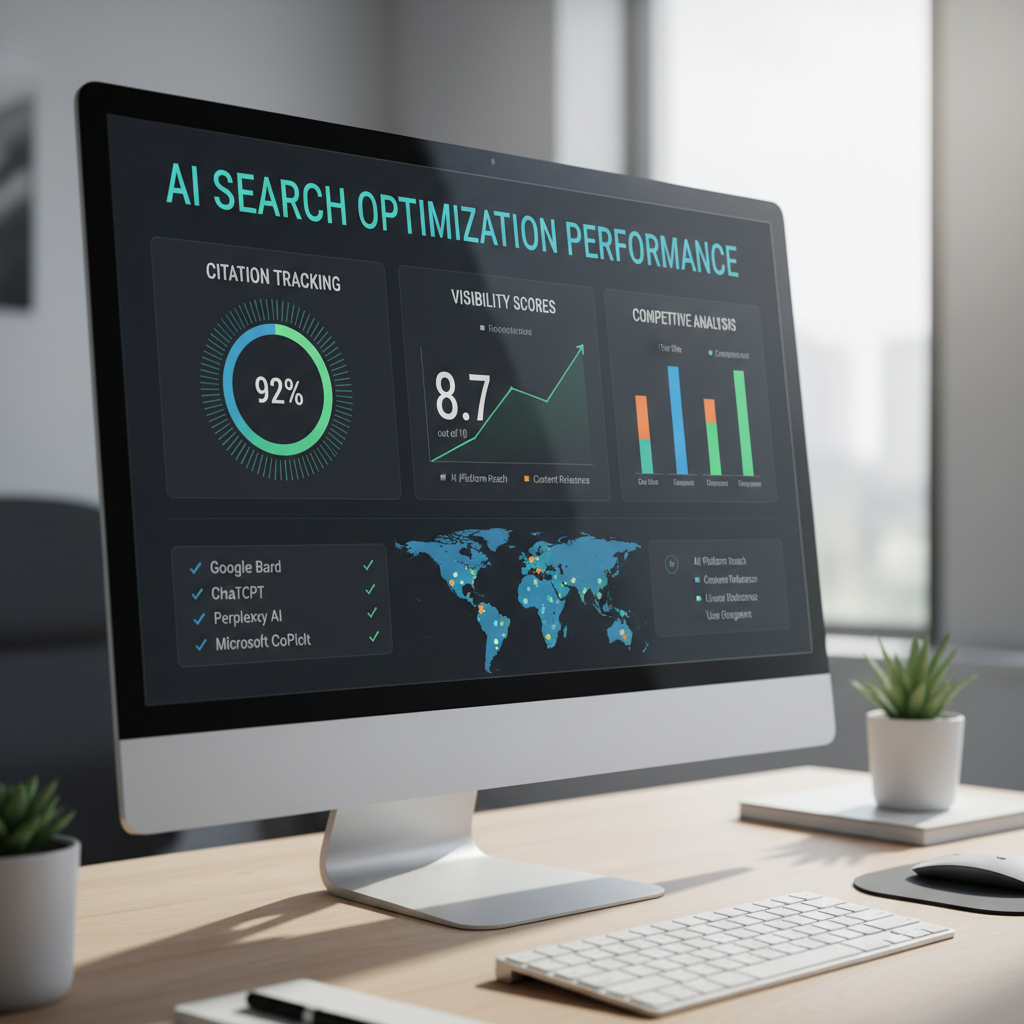
Track AI search performance using specialized tools and metrics designed specifically for AI search visibility. Traditional analytics tools don't capture AI search performance effectively. Key metrics to monitor include:- AI search mentions: Frequency of brand/content citations across AI platforms
- Response positioning: Where your content appears in AI-generated responses
- Query coverage: Range of topics for which AI engines cite your content
- Authority scores: AI engines' assessment of your content credibility
Sources & References
- Google Developers, "Top ways to ensure your content performs well in Google's AI search", 2025
- Wikipedia, "AI SEO", 2026
- Squarespace, "How Do AI Search Results Work?: How to Prepare for AI SEO", 2026
- Harvard Sites, "Optimizing your site for search engines and artificial intelligence", 2026
- Digital Marketing Institute, "How to Optimize Content for AI Search and Discovery", 2026
- Salesforce, "AI for SEO: Your Guide for 2026", 2026
- Semrush, "How to Optimize for AI Search Results in 2026", 2026
- BrightEdge, "What Exactly Is AI in SEO?", 2026
- Common Crawl, "AI Optimization Is Here: Are You Ready for Search 2.0?", 2026
Frequently Asked Questions
1. What's the difference between AI search optimization and traditional SEO?
Understanding this approach is essential. Understanding this method is essential. AI search optimization focuses on how artificial intelligence systems understand and cite content, while traditional SEO targets keyword rankings in search engines. AI search prioritizes content authority, semantic relevance, and citation-worthiness over traditional ranking factors like backlinks and keyword density.
2. Which AI search engines should I optimize for?
Focus on major AI search platforms including ChatGPT, Google's AI Overview, Perplexity, Claude, and Gemini. These platforms currently handle the majority of AI search queries and offer the greatest visibility opportunities for businesses.
3. How long does it take to see results from AI search optimization?
Most businesses see initial AI search citations within 30-60 days of implementing proper optimization strategies. However, building significant authority and consistent visibility typically requires 3-6 months of consistent effort and high-quality content production.
4. Can I track my AI search performance?
Yes, specialized tools now exist to monitor AI search visibility and citations. These tools track mentions across AI platforms, analyze response positioning, and measure authority scores that traditional analytics tools can't capture.
5. Do I need to stop traditional SEO to focus on AI search optimization?
No, traditional SEO and AI search optimization complement each other. Many optimization strategies overlap, and maintaining visibility across both traditional and AI search engines provides comprehensive digital presence coverage.
6. What type of content performs best in AI search?
Comprehensive, authoritative content with clear expertise signals performs best. This includes detailed how-to guides, research-backed articles, expert interviews, and content with proper citations and structured data implementation.
7. Is AI search optimization expensive?
AI search optimization is typically much more cost-effective than traditional SEO agencies. While agencies charge $3,000-10,000 monthly, automated AI search optimization solutions start around $99 monthly, making it accessible for small and medium businesses.
8. What technical requirements are needed for AI search optimization?
Key technical requirements include proper schema markup, JSON-LD structured data, optimized robots.txt files, fast loading speeds, mobile responsiveness, and clear content hierarchy that AI systems can parse effectively.
AI search engine optimization represents a fundamental shift in how businesses approach digital visibility and customer discovery. As AI search platforms continue gaining market share, organizations that invest in proper optimization strategies now will enjoy significant competitive advantages in the coming years. The key to success lies in understanding that AI search optimization isn't simply traditional SEO with new keywords. It requires a comprehensive approach encompassing content authority, technical implementation, and consistent expertise demonstration that AI systems can recognize and validate. Ready to dominate AI search results and get discovered by your ideal customers on ChatGPT, Perplexity, and other AI platforms? Moonrank's automated AI search optimization platform handles everything from daily content creation to technical optimization, helping businesses achieve AI search visibility at a fraction of traditional agency costs. Start your 3-day free trial at www.moonrank.ai and see how AI search optimization can transform your digital presence.
Recommended Articles
Explore more from our content library: