AI Transforming SEO: Complete Guide for Modern Businesses
Discover how AI transforming SEO is reshaping digital marketing. Learn strategies, tools, and best practices for AI-powered search optimization in 2026.

| Key Insight | Explanation |
|---|---|
| AI Search Engine Growth | ChatGPT, Claude, and Perplexity now handle billions of queries monthly, requiring new optimization strategies |
| Intent-Based Optimization | AI systems prioritize understanding user intent over keyword density for content ranking |
| Automated Content Creation | AI tools can generate and optimize SEO content at scale while maintaining quality and relevance |
| Technical Schema Evolution | New markup formats like llms.txt help AI systems better understand and cite website content |
| Real-Time Optimization | AI enables continuous content and technical optimization based on performance data |
| Cost-Effective Solutions | Automated AI SEO platforms reduce agency costs from $3,000+ to under $100 monthly |
What Is AI Transforming SEO?
AI transforming SEO refers to the fundamental shift from traditional search engine optimization to strategies designed for artificial intelligence-powered search systems. This evolution encompasses how businesses optimize their content, technical infrastructure, and digital presence to gain visibility across AI search engines and chatbots that provide direct answers to user queries [1].The Evolution from Traditional SEO
Traditional SEO focused primarily on ranking websites in search engine results pages (SERPs) through keyword optimization, link building, and technical improvements. The goal was to appear among the top ten blue links that users could click through to visit your website. AI-powered search fundamentally changes this dynamic. Instead of presenting a list of links, AI systems analyze vast amounts of information to provide direct, conversational answers. When someone asks ChatGPT about a topic, the AI doesn't show search results - it synthesizes information from its training data and real-time sources to deliver a comprehensive response. This shift means businesses must optimize for being cited and referenced within AI responses rather than just ranking in traditional search results. The focus moves from driving clicks to becoming a trusted source that AI systems recognize and quote.Core Components of AI SEO
AI transforming SEO involves several key elements that distinguish it from conventional optimization:- Intent Understanding: AI systems analyze the deeper meaning behind user queries rather than matching keywords literally
- Contextual Relevance: Content must provide comprehensive, accurate information that addresses user needs completely
- Source Authority: AI systems evaluate the credibility and expertise of information sources when generating responses
- Structured Data: Enhanced markup helps AI systems understand and extract relevant information from web content
- Real-time Optimization: Continuous monitoring and adjustment based on AI search performance metrics
Pro Tip: Focus on creating comprehensive, expert-level content that thoroughly answers user questions. AI systems favor authoritative sources that provide complete information over surface-level content.
How AI Transforms SEO Mechanics
AI fundamentally alters how search optimization works by introducing new ranking factors, content evaluation methods, and user interaction patterns. Understanding these mechanical changes is crucial for developing effective AI SEO strategies in 2026.Intent-Based Content Evaluation
Traditional search engines relied heavily on keyword density and exact match phrases to determine content relevance. AI systems take a more sophisticated approach by analyzing the semantic meaning and context of content to understand whether it truly addresses user intent. Modern AI search engines evaluate content quality through multiple dimensions:- Semantic Understanding: AI analyzes relationships between concepts, not just keyword matches
- Completeness: Content that thoroughly covers a topic receives higher priority than partial information
- Accuracy: AI systems cross-reference information across multiple sources to verify claims
- Freshness: Recent, up-to-date information receives preference over outdated content
- Expert Authority: Content from recognized experts and authoritative sources gains higher trust scores
Technical Infrastructure Changes
AI search engines require different technical optimizations compared to traditional search. New markup formats and structured data schemas have emerged specifically to help AI systems understand and extract information from websites. Key technical elements for AI optimization include:- Enhanced Schema Markup: Detailed structured data that describes content context and relationships
- LLMs.txt Files: Special files that provide AI systems with guidance on how to interpret and cite website content
- Citation-Ready Formatting: Content structured to be easily extractable and quotable by AI systems
- API Integration: Direct data feeds that allow AI systems to access real-time information
- Mobile-First Design: Optimized experiences for AI-powered mobile assistants and voice search
Real-Time Performance Monitoring
Unlike traditional SEO, which often involves waiting weeks or months to see ranking changes, AI search optimization requires real-time monitoring and adjustment. AI systems continuously update their understanding and preferences, making agile optimization essential. Modern AI SEO platforms track performance across multiple AI search engines simultaneously, providing insights into:- Citation frequency across different AI platforms
- Content performance in AI-generated responses
- User engagement with AI-recommended content
- Technical optimization effectiveness
- Competitive positioning in AI search results
Pro Tip: Implement automated monitoring systems that track your content's performance across multiple AI search engines. What works for ChatGPT might not work for Claude or Perplexity, so platform-specific optimization is crucial.
Key Benefits of AI SEO Transformation
Embracing AI transforming SEO delivers significant advantages for businesses willing to adapt their digital marketing strategies. These benefits extend beyond traditional search visibility to encompass new forms of customer discovery and engagement in 2026.Enhanced Customer Discovery
AI search engines are becoming primary discovery channels for consumers seeking products, services, and information. When users ask AI assistants for recommendations, businesses optimized for AI search gain unprecedented visibility among highly qualified prospects. Unlike traditional search results that require users to click through multiple websites, AI search provides immediate, actionable recommendations. This direct presentation means businesses that appear in AI responses capture attention at the exact moment of need, leading to higher conversion rates. Key discovery benefits include:- Direct Recommendations: AI systems can directly recommend your business when users ask for solutions
- Contextual Positioning: Your content appears alongside relevant, helpful information rather than competing ads
- Trust Transfer: AI citation lends credibility and authority to your brand
- Reduced Competition: Fewer businesses currently optimize for AI search, creating opportunities for early adopters
Cost-Effective Automation
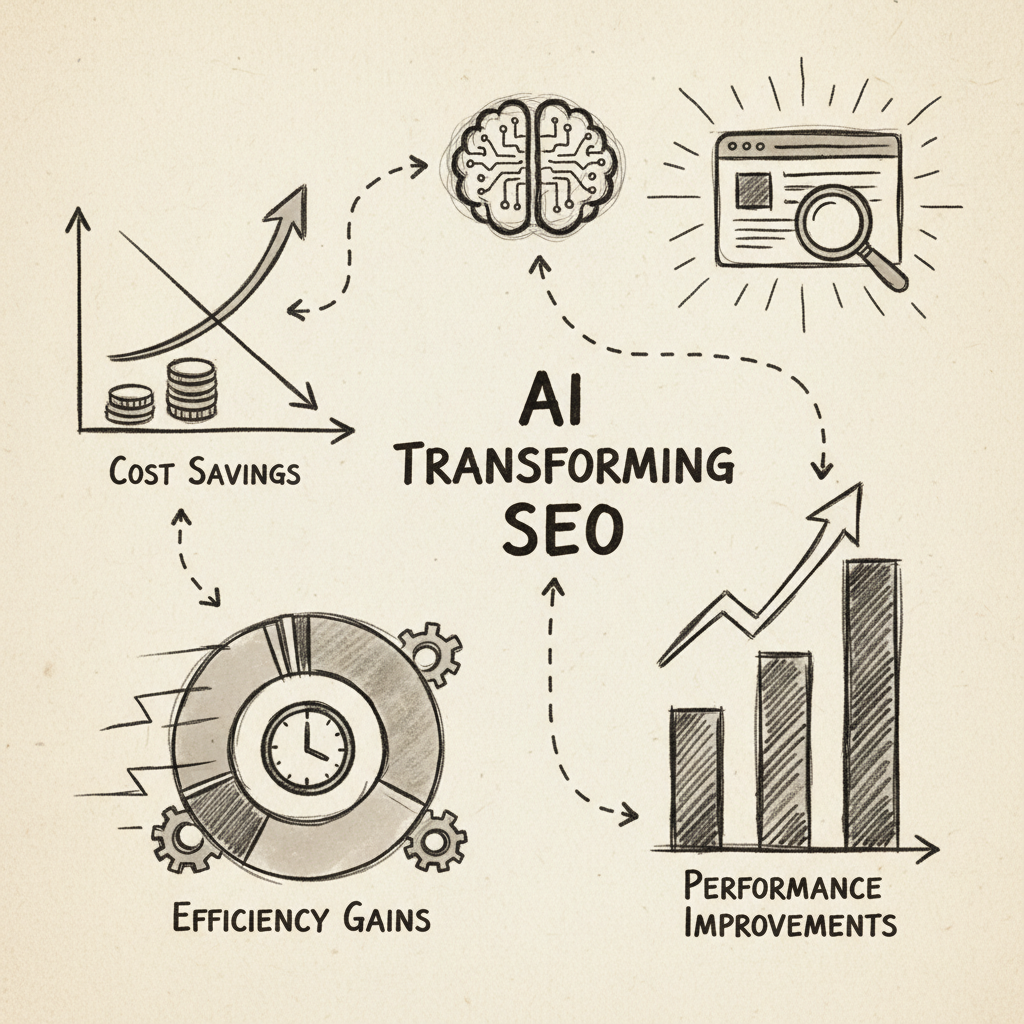
Traditional SEO often requires expensive agency partnerships or dedicated internal teams to manage ongoing optimization efforts. AI transforming SEO enables automated content creation, technical optimization, and performance monitoring at a fraction of traditional costs.| Traditional SEO | AI SEO Automation | Cost Savings |
|---|---|---|
| Manual content creation | Automated daily content generation | 80-90% reduction |
| Monthly agency retainers | Automated optimization platform | 95% cost reduction |
| Manual performance tracking | Real-time AI search monitoring | 70% time savings |
| Technical optimization | Automated schema and markup | 85% efficiency gain |
Improved Content Quality and Relevance
AI-powered content optimization tools analyze user intent patterns and competitive landscapes to generate highly relevant, valuable content that resonates with target audiences. This approach produces better content than traditional keyword-focused strategies. Modern AI SEO systems can:- Identify content gaps in your industry niche
- Generate topic clusters that comprehensively address user needs
- Optimize content tone and style for different audience segments
- Ensure factual accuracy through real-time verification
- Adapt content based on performance feedback
Pro Tip: Start with automated content generation for long-tail, informational keywords where AI can provide comprehensive answers. This builds authority while you develop more complex AI SEO strategies.
Common Challenges in AI SEO Implementation
While AI transforming SEO offers significant opportunities, businesses face several challenges when adapting their optimization strategies. Understanding these obstacles and their solutions is crucial for successful implementation in 2026.Platform Fragmentation and Inconsistency
Unlike traditional search engines with relatively standardized ranking factors, AI search platforms operate with different algorithms, training data, and optimization preferences. What works for ChatGPT may not translate directly to Claude, Gemini, or Perplexity. Each AI platform has unique characteristics:- ChatGPT: Favors conversational, detailed explanations with clear structure
- Claude: Prioritizes accuracy and fact-checking, preferring authoritative sources
- Gemini: Integrates real-time search data, valuing fresh, current information
- Perplexity: Emphasizes cited sources and transparent information attribution
Quality Control and Brand Safety
AI-generated content can sometimes produce inaccurate information or adopt inappropriate tones that don't align with brand values. Businesses must implement robust quality control processes to ensure AI-optimized content maintains accuracy and brand consistency. Common quality challenges include:- Factual errors in AI-generated content
- Inconsistent brand voice across automated content
- Outdated information in rapidly changing industries
- Potential bias in AI-generated recommendations
- Lack of human oversight in automated publishing
Technical Implementation Complexity
AI search optimization requires new technical skills and infrastructure that many traditional SEO teams lack. Implementing proper schema markup, creating llms.txt files, and setting up AI search monitoring requires specialized knowledge. Key technical challenges include:- Schema Markup Complexity: AI search requires more detailed structured data than traditional SEO
- API Integration: Connecting with AI search platforms for real-time optimization
- Performance Monitoring: Tracking visibility across multiple AI platforms simultaneously
- Content Formatting: Structuring content for optimal AI extraction and citation
- Legacy System Integration: Adapting existing websites and content management systems
Measuring ROI and Attribution
Traditional SEO metrics like keyword rankings and organic traffic don't directly apply to AI search optimization. Businesses must develop new measurement frameworks to evaluate AI SEO performance and demonstrate return on investment. Workplace Technology Trends Transforming Business In 2026 highlights how companies are adapting their measurement strategies to account for AI-driven customer interactions that don't follow traditional conversion paths. New metrics for AI SEO success include:- Citation frequency across AI platforms
- Brand mention sentiment in AI responses
- Direct referral traffic from AI recommendations
- Conversion rates from AI-driven discovery
- Share of voice in AI search results
Pro Tip: Start with simple AI SEO implementations like optimizing existing high-performing content for AI citation. This provides quick wins while you develop more sophisticated strategies and measurement frameworks.
Best Practices for AI SEO in 2026
Implementing effective AI transforming SEO strategies requires following proven best practices that align with how AI search engines evaluate and present content. These recommendations are based on current research and real-world performance data from successful AI SEO implementations.Content Strategy for AI Optimization
Creating content that AI systems recognize as authoritative and cite-worthy requires a strategic approach that goes beyond traditional SEO writing. AI search engines prioritize comprehensive, accurate information that directly addresses user needs. Essential content best practices include:- Answer-First Structure: Begin each section with direct, concise answers to implied questions
- Comprehensive Coverage: Address all aspects of a topic rather than focusing on narrow keyword targets
- Expert Attribution: Include quotes and references from recognized industry authorities
- Current Information: Regularly update content with the latest data and developments
- Clear Formatting: Use headers, lists, and structured formatting that AI can easily parse
- Source Citations: Include proper citations and links to authoritative sources
Technical Implementation Framework
Proper technical setup forms the foundation of successful AI SEO. This involves implementing specific markup, file structures, and optimization elements that help AI systems understand and extract information from your website.| Technical Element | Purpose | Implementation Priority |
|---|---|---|
| Enhanced Schema Markup | Helps AI understand content context and structure | High |
| LLMs.txt File | Provides AI systems with content usage guidelines | Medium |
| Citation-Ready Formatting | Makes content easily extractable for AI responses | High |
| API Integration | Enables real-time data access for AI systems | Low |
| Mobile Optimization | Ensures compatibility with mobile AI assistants | High |
Platform-Specific Optimization Strategies
Each AI search platform has unique preferences and algorithms that require tailored optimization approaches. Understanding these differences enables more effective multi-platform strategies. Platform-specific considerations:- ChatGPT Optimization:
- Focus on conversational, natural language content
- Include step-by-step instructions and clear explanations
- Optimize for question-and-answer format content
- Claude Optimization:
- Emphasize accuracy and fact-checking
- Include authoritative source citations
- Provide balanced, nuanced perspectives on complex topics
- Gemini Optimization:
- Focus on fresh, current information
- Integrate real-time data and trends
- Optimize for local and contextual relevance
- Perplexity Optimization:
- Structure content for easy citation extraction
- Include clear attribution and source information
- Focus on research-backed, data-driven content
Performance Monitoring and Optimization
Successful AI SEO requires continuous monitoring and adjustment based on performance data across multiple AI platforms. This involves tracking new metrics that don't exist in traditional SEO. Key performance indicators for AI SEO include:- Citation frequency across different AI platforms
- Brand mention sentiment in AI responses
- Content visibility in AI-generated answers
- User engagement with AI-recommended content
- Conversion rates from AI search traffic

Pro Tip: Implement automated daily content publishing that's optimized for AI search engines. Consistency and freshness are crucial ranking factors that manual approaches struggle to maintain at scale.
Sources & References
- Web Professionals Global, "How AI is Transforming SEO: What Web Professionals Need to Know", 2026
- Digital Marketing Institute, "A Guide to AI and SEO", 2026
- Salesforce, "AI for SEO: Your Guide for 2026", 2026
- Forbes, "How AI Is Transforming The Future Of SEO", 2025
- Neil Patel, "AI SEO: How Artificial Intelligence Is Changing Search", 2026
- BrightEdge, "What Exactly Is AI in SEO?", 2026
- Sperling Interactive, "AI's Impact on SEO", 2026
Frequently Asked Questions
1. What is the difference between traditional SEO and AI SEO?
Traditional SEO focuses on ranking websites in search engine results pages, while AI SEO optimizes for being cited and referenced in AI-generated responses. AI transforming SEO emphasizes content quality, intent understanding, and authority over keyword density and link building.
2. Which AI search engines should businesses optimize for in 2026?
The primary AI search platforms include ChatGPT, Claude, Gemini, and Perplexity. Each has unique algorithms and preferences, so comprehensive AI SEO strategies should target all major platforms rather than focusing on just one.
3. How much does AI SEO cost compared to traditional SEO?
AI SEO automation platforms typically cost $99-$299 monthly, compared to traditional SEO agencies charging $3,000-$10,000 monthly. The automation reduces costs by 85-95% while often delivering superior results across AI search platforms.
4. Can AI SEO tools replace human content creators entirely?
AI tools excel at content generation and optimization but still require human oversight for quality control, brand alignment, and strategic direction. The best approach combines AI automation with human expertise for optimal results.
5. How do you measure success in AI SEO?
Key metrics include citation frequency across AI platforms, brand mentions in AI responses, content visibility in AI-generated answers, and conversion rates from AI search traffic. Traditional metrics like keyword rankings are less relevant for AI SEO.
6. What technical changes are needed for AI SEO optimization?
Essential technical elements include enhanced schema markup, llms.txt files, citation-ready content formatting, and mobile optimization. These help AI systems understand, extract, and properly attribute your content in their responses.
7. How quickly can businesses see results from AI SEO efforts?
AI search engines update their understanding more frequently than traditional search engines. Businesses often see initial improvements in AI citations within 2-4 weeks of implementing proper optimization strategies, with significant results typically appearing within 2-3 months.
8. Is AI transforming SEO suitable for all business types?
AI SEO benefits most businesses, but it's particularly valuable for B2B SaaS companies, professional services, e-commerce businesses, and any company that relies on being discovered when potential customers ask questions about their industry or solutions.

Recommended Articles
Explore more from our content library: