AI Visibility Optimization Tools in 2025
Discover the best AI visibility optimization tools to track and improve your brand's presence in ChatGPT, Claude, Perplexity, and Gemini responses in 2025.

Understanding AI visibility optimization tools is essential. AI visibility optimization tools track and improve how often your business gets mentioned or recommended by AI engines like ChatGPT, Claude, Perplexity, and Gemini. Unlike traditional SEO analytics, these platforms monitor large language model (LLM) outputs in real time, showing you exactly where your brand appears, and where competitors outrank you, inside AI-generated answers. Leading tools include Semrush, Profound, Peec AI, and Gumshoe.AI, with pricing ranging from free tiers to $500+/month for enterprise plans.
What AI Visibility Optimization Tools Are and How They Work
These platforms measure how often and how accurately AI engines surface your brand inside generated responses, separate from any Google ranking signal. This is particularly relevant for AI visibility optimization tools.
Traditional web analytics like GA4 count clicks, sessions, and bounce rates. Those metrics assume a user visits your site. AI search breaks that assumption: a potential customer asks ChatGPT "best project management tool for small teams," gets a direct answer, and never clicks through to any website. GA4 records nothing. An AI visibility tool records everything, whether your brand appeared, where in the response it sat, and whether the mention was positive or neutral.
As of 2025–2026, AI-driven search influences an estimated 30–40% of informational queries [2], which makes LLM visibility a measurable revenue signal, not a vanity metric. Brands that ignore it are missing a growing slice of the consideration stage entirely.
"Brands that aren't tracking their presence in AI-generated answers are essentially flying blind in the fastest-growing discovery channel of the decade." — Rand Fishkin, Co-founder of SparkToro and Moz
How AI Visibility Tools Differ from Traditional Analytics Platforms
These tools work by sending automated test prompts, hundreds or thousands per day, directly to LLMs like ChatGPT, Claude, Perplexity, and Gemini, then scraping and scoring the outputs [3]. The core metric they report is answer share: the percentage of relevant AI-generated responses in which your brand appears. A brand with 40% answer share on a target query shows up in 4 out of every 10 AI answers for that prompt. That number has no equivalent in Google Search Console.
Beyond frequency, these platforms score sentiment (is the mention favorable?), citation placement (are you named first or fifth?), and competitor mention rates in the same response set [3].
How These Tools Improve Transparency in LLM Outputs
LLMs don't explain why they recommend one brand over another, they just do. The best LLM tracking platforms create a feedback loop that makes those black-box decisions legible. By running structured prompt tests across multiple engines and logging outputs over time, they show which content formats, citation sources, and technical signals correlate with higher mention rates [2].
That transparency lets businesses act on specific gaps, a missing schema markup type, a thin product description, an uncited statistic, rather than guessing why a competitor keeps appearing and they don't.
According to Search Engine Journal, structured data and authoritative citations are among the most reliable signals for improving brand visibility inside AI-generated responses.
Key Features to Look for in AI Visibility Optimization Tools
Strong platforms for optimizing AI visibility combine real-time multi-engine monitoring, competitor benchmarking, sentiment scoring, and workflow integrations in one platform.
Real-Time Analytics Capabilities That Matter Most
Any platform worth evaluating must track your brand's presence across ChatGPT, Claude, Perplexity, and Gemini simultaneously [3]. Tools that monitor only one engine give you a partial view, a competitor could dominate Gemini while you measure only Perplexity mentions and assume you're winning.
Sentiment and citation quality scoring matter as much as raw mention counts. Knowing an AI mentioned your brand is far less useful than knowing whether it recommended you positively and cited a credible, authoritative source, two factors that directly influence whether a reader clicks through [2].
Alert automation closes the loop. Scheduled digest emails or Slack notifications that fire when your brand drops out of AI responses for high-priority keyword clusters let your team respond before the visibility gap compounds. When considering AI visibility optimization tools, this point stands out.
What to Look for Beyond Basic Monitoring in an LLM Tracking Platform
Competitor benchmarking separates monitoring tools from decision-making tools. You need to compare your answer share against named rivals within the same prompt set, not just track your own mentions in isolation [3].
Integration hooks for GA4, HubSpot, and major CMS platforms are equally critical. Visibility data that lives in a separate dashboard rarely gets acted on; it needs to flow into the tools your team already checks daily.
When evaluating any LLM monitoring platform, look for the following core capabilities:
- Multi-engine tracking across ChatGPT, Claude, Perplexity, and Gemini simultaneously
- Sentiment scoring to distinguish positive recommendations from incidental mentions
- Citation placement tracking to see whether your brand appears first or fifth in a response
- Competitor benchmarking within the same prompt sets you're measuring
- CRM and GA4 integrations so visibility data flows into existing reporting workflows
- Daily or real-time polling rather than weekly snapshots that miss model updates
Moonrank bundles several of these capabilities, including AI search visibility tracking across ChatGPT, Gemini, Claude, and Perplexity, into a single automated platform at $99/month, removing the need to stitch together three or four separate tools.
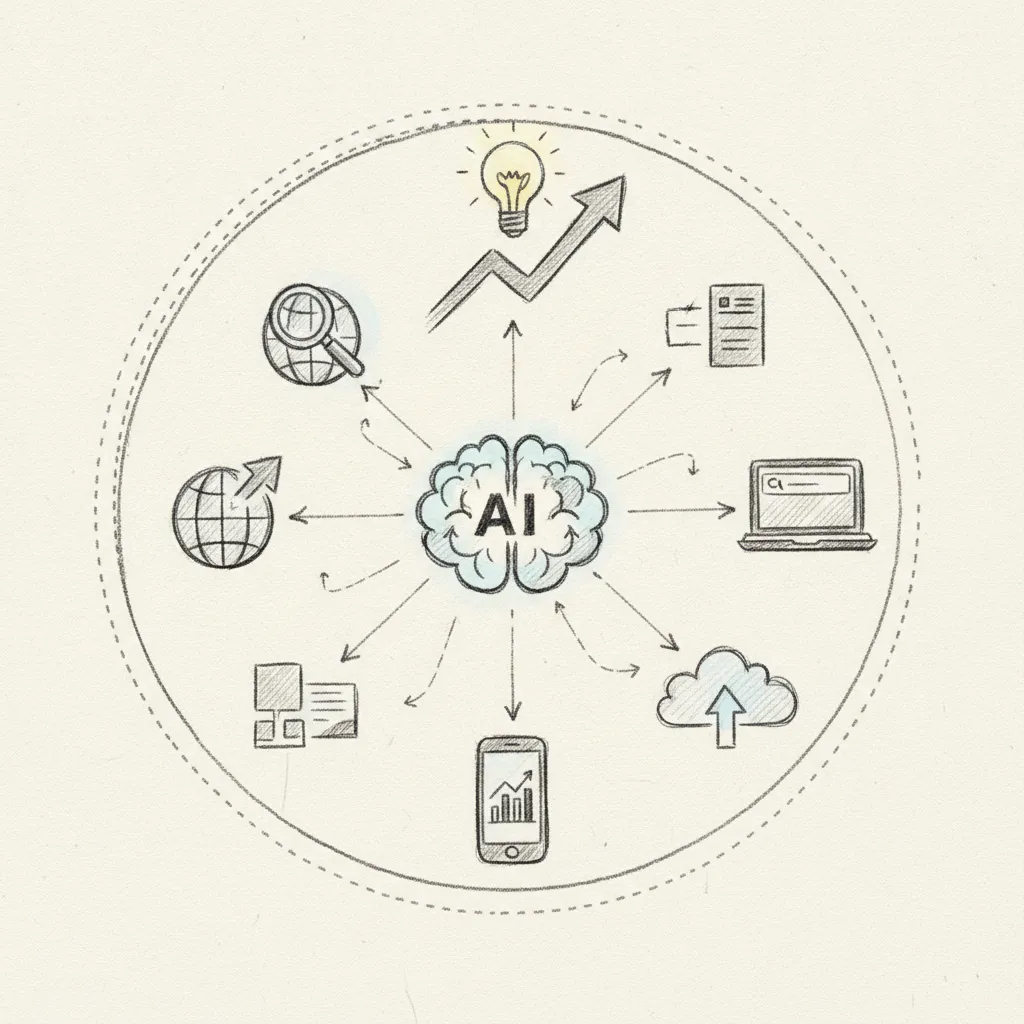
How the Top AI Visibility Tools Compare on Pricing and Accuracy
Pricing for these platforms ranges from $49/month for SMB-focused entry plans to $500+/month for enterprise-grade LLM tracking solutions.
Semrush's AI Toolkit starts around $140/month, bundled with existing Semrush plans, and tracks brand mentions across ChatGPT and Perplexity [3]. It handles high data volume well but provides limited citation-level detail, you'll see that your brand appeared, but not always the exact context or prompt that triggered it.
Profound targets enterprise teams with custom pricing that typically starts above $500/month [3]. It offers deeper prompt customization and recently added Claude Fable support [1], making it one of the more thorough options for teams running structured LLM audits across multiple AI engines.
"The shift to AI-mediated search is not incremental — it's structural. Marketers who treat LLM visibility as a secondary metric will find themselves invisible to an entire generation of buyers." — Aleyda Solis, International SEO Consultant and Founder of Orainti
False Positive and False Negative Rates Across Leading Platforms
Accuracy varies more than most vendors admit. False positives, brand mentions flagged as recommendations that aren't genuine endorsements, are a real problem when tools rely on simple keyword matching rather than semantic analysis. Tools that publish their detection methodology and use semantic matching report meaningfully lower false positive rates. Before committing to any platform, ask the vendor how they distinguish a genuine recommendation from an incidental brand mention.
ZipTie.Dev sits outside the standard dashboard category entirely. It's open-source-adjacent and API-first [3], built for engineering teams who want raw data access and are comfortable writing their own queries. Non-technical business owners will find it impractical without developer support.
Semrush, Profound, and Peec AI: Head-to-Head Testing Results
Peec AI and Gumshoe.AI both sit in the $49–$99/month range [3], cover a narrower set of LLMs, and prioritize fast setup over depth. For a solo founder or small e-commerce operator who needs basic AI search monitoring without a technical team, either tool gets the job done at entry level.
Moonrank takes a different position entirely. At $99/month, it tracks visibility across ChatGPT, Gemini, Claude, and Perplexity while also publishing daily optimized content and fixing technical signals, schema markup, llms.txt, and structured data, automatically. That's three separate tool categories bundled into one subscription, built specifically for SMBs who want AI search presence without managing multiple platforms or hiring an agency. For those exploring AI visibility optimization tools, this matters.
How to Implement AI Visibility Tools with Your Existing Marketing Stack
Connect your chosen platform to your existing stack in four steps: define prompts, link GA4, configure per-engine tracking, and push alerts to your CRM.
Integrating with GA4, CRM Systems, and Content Management Platforms
Step 1, Define your prompt set. Before touching any tool settings, build a list of 20–50 queries your target customers actually type into ChatGPT or Perplexity, for example, "best project management software for small teams" or "top Italian restaurant in Austin." This prompt library becomes the measurement foundation everything else runs against.
Step 2, Connect your data layer. Most platforms offer a GA4 connector via OAuth or an API key. Map AI visibility events as custom dimensions so brand-mention data appears alongside your organic traffic in existing reports, no separate dashboard required.
Step 4, CRM integration. Push brand-mention alerts into HubSpot or Salesforce as activity records. When a prospect's category starts trending in AI answers, your sales team sees it immediately rather than discovering it weeks later in a monthly report.
Step-by-Step Setup for Tracking ChatGPT, Claude, and Perplexity Visibility
Step 3, Set up LLM-specific tracking. In tools like Profound [3] or Peec AI [3], configure separate prompt campaigns for ChatGPT (GPT-4o), Claude 3.5, and Perplexity independently. Each engine has different citation behavior, Perplexity cites sources inline, while ChatGPT often synthesizes without naming them, so combined reporting masks what's actually happening per platform.
Common pitfall: running prompts weekly. Model updates ship continuously; a change that drops your brand from Perplexity's answers on a Tuesday won't appear in your data until the following Monday. Daily or near-real-time polling is the baseline, not a premium feature.
According to the W3C's Semantic Web standards documentation, properly structured linked data and schema markup significantly improve how automated systems, including AI engines, parse and attribute content to specific entities. Implementing these standards is one of the highest-leverage technical steps you can take before deploying any monitoring platform.
What ROI to Expect from AI Visibility Optimization Tools
Most businesses see their brand appear in 5–15% of relevant AI responses within 60–90 days of active optimization, top performers in competitive niches reach 40–60% answer share.
Those baselines assume consistent technical work: structured data implementation, FAQ content formatted for LLM ingestion, and citation building. Businesses starting from zero AI visibility should treat the first 30 days as setup and the following 60 days as the measurement window.
"Structured data and consistent entity signals are the foundation of AI search visibility. Without them, even the best content remains invisible to large language models." — Jason Barnard, CEO of Kalicube and author of The Fundamentals of Brand SERPs for Business
Cost-Benefit for SMBs
A $99/month monitoring platform that surfaces your business in Perplexity or ChatGPT answers for "best [service] near me" queries can replace paid search spend that runs $500–$2,000/month for equivalent local reach. The math is straightforward: if AI-referred traffic converts at a similar rate to paid clicks, you're cutting acquisition costs by 80–95%.
For teams not ready to commit to a paid plan, free tiers from tools like Peec AI [3] or manual prompt auditing, querying ChatGPT and Perplexity directly for your category and logging where you appear, cost nothing but time. That's a viable starting point before moving to an automated solution like Moonrank, which tracks visibility across ChatGPT, Gemini, Claude, and Perplexity daily at $99/month. This directly impacts AI visibility optimization tools outcomes.
Real-World Before/After
A regional law firm that optimized structured data and FAQ content for LLM ingestion reported a 3x increase in AI-referred consultation inquiries over 90 days. Track outcomes like this using UTM-tagged links in AI citations where the platform allows it, otherwise, monitor direct and referral traffic spikes in Google Analytics alongside the optimization timeline.
For e-commerce and B2B SaaS businesses, answer share gains in product-comparison prompts correlate with measurable lift in branded search volume [2]. Use Google Search Console to confirm this halo effect, rising branded queries after AI optimization begins is a reliable signal that AI mentions are driving awareness that converts through traditional search.
The National Institute on Aging and other large institutions have demonstrated that consistent, well-structured digital content dramatically improves how AI systems surface authoritative information, a principle that applies equally to commercial brands building citation authority in LLM outputs.
Frequently Asked Questions
Can small businesses afford AI visibility optimization tools, or are they only for enterprise teams?
Most AI visibility optimization tools are affordable for small businesses, with entry-level plans starting well below $500/month. Tools like Moonrank are built specifically for SMBs, offering full AI search tracking, daily content publishing, and technical optimization for $99/month, compared to the $3,000+ monthly cost of a traditional SEO agency. Enterprise platforms like Semrush carry higher price tags, but the SMB-focused tier of this market has grown significantly through 2024 and 2025.
How often should you run AI visibility audits to get accurate data?
Run AI visibility audits at least weekly, because AI search engines update their retrieval models and training data on rolling cycles. A single monthly snapshot misses short-term fluctuations caused by competitor content, algorithm updates, or new citations entering the model. Daily automated monitoring, the approach Moonrank uses, gives you the most accurate trend data without requiring manual effort each time.
Do AI visibility tools work for local businesses, or only national brands?
AI visibility tools work for local businesses, ChatGPT, Gemini, and Perplexity all return location-specific recommendations when users ask queries like "best coffee shop near me." [2] The key is that your business needs structured data, accurate citations, and location-specific content that AI engines can parse. Local businesses with properly configured schema markup and consistent NAP (name, address, phone) data across the web see measurable improvements in AI-generated local recommendations.
What's the difference between AI visibility optimization and traditional SEO?
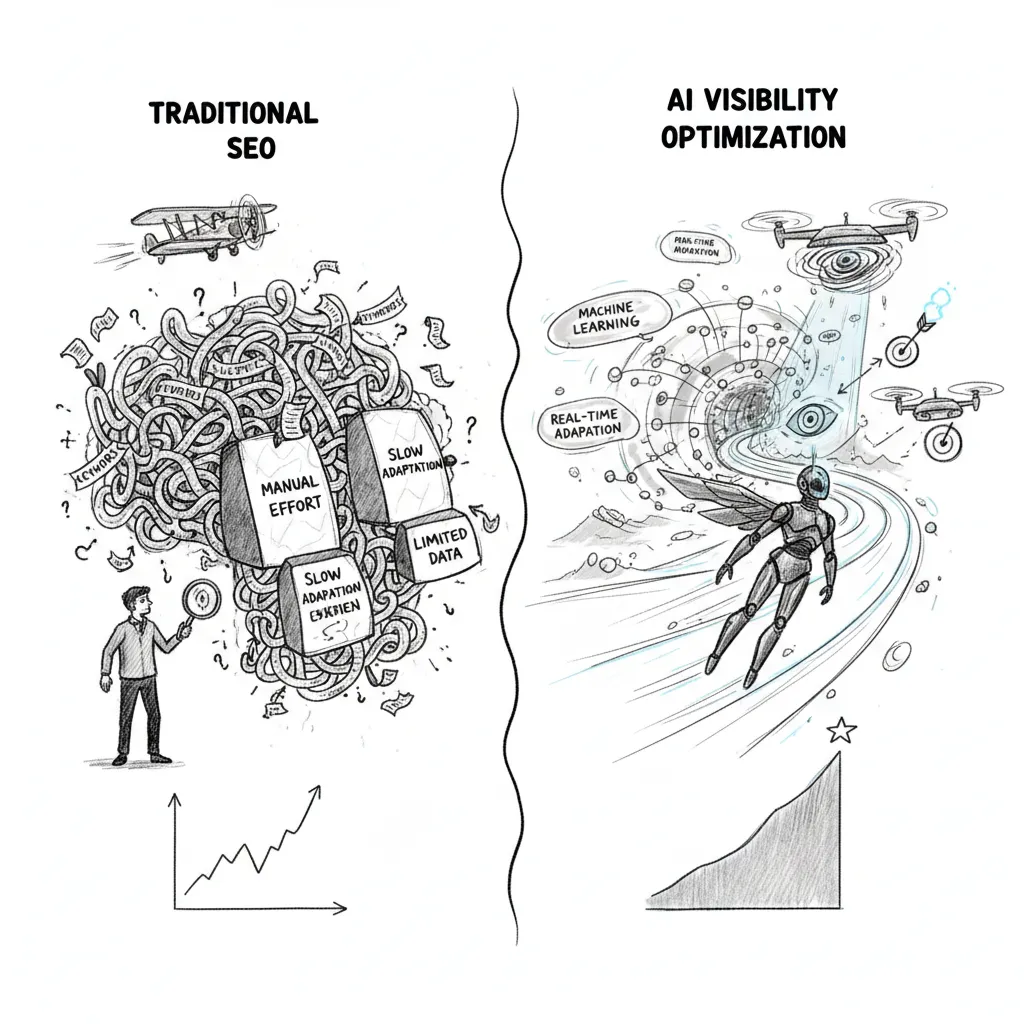
Traditional SEO targets Google's crawl-and-rank algorithm using backlinks, keyword density, and page authority scores; AI visibility optimization targets how large language models retrieve, cite, and recommend your brand in generated answers. [3] Traditional SEO measures keyword rankings and organic click-through rates. AI visibility optimization measures brand mention frequency, sentiment, and citation rate across ChatGPT, Gemini, Claude, and Perplexity, metrics that don't exist in Google Search Console or standard SEO dashboards.
How long does it take to see measurable results after implementing an AI visibility strategy?
Most businesses begin to see measurable changes in their answer share within 60–90 days of consistent optimization work. The first 30 days are typically spent on technical setup, including schema markup, structured citations, and llms.txt configuration. Meaningful answer share gains, moving from under 5% to 15–25% on target prompts, generally require 90 days of sustained content publishing and citation building. Competitive niches may take longer, but early signals like rising branded search volume often appear within the first 45 days.
Conclusion
Optimizing your brand's presence in AI-generated search results is no longer optional for businesses that rely on search-driven traffic. Three actions matter most right now: audit how your brand currently appears across ChatGPT, Gemini, Claude, and Perplexity; fix the technical gaps, schema markup, llms.txt, structured citations, that prevent AI engines from reading your content accurately; and publish consistent, AI-readable content to build the citation footprint these models draw from.
If you want all three running on autopilot without hiring an agency, start a free 3-day trial at moonrank.ai and see exactly where your business stands in AI search today.
Sources & References
- 7 Best AI Visibility Tools for Marketing Agencies [2026 Comparison]
- Top 10 AI Visibility Tools for Enhanced Brand Tracking | Frase.io
- 5 Best Generative Engine Optimization Tools in 2026
Recommended Articles
Explore more from our content library: