Best AI SEO Automation Tools & Strategies for 2026
Discover the top AI SEO automation tools and strategies for 2026. Complete guide to automated content, technical optimization, and AI search visibility.

| Key Insight | Explanation |
|---|---|
| Market Growth | The automated SEO market has grown 340% since 2024, with 78% of businesses now using automated optimization tools. |
| Cost Efficiency | Automated AI SEO tools cost 85% less than traditional agencies while delivering comparable or better results. |
| AI Search Engine Focus | Modern tools target ChatGPT, Claude, Perplexity, and Gemini alongside traditional Google optimization. |
| Daily Automation Capability | Leading platforms can generate, optimize, and publish SEO content daily without human intervention. |
| Technical SEO Automation | Schema markup, structured data, and citation optimization are now fully automated processes. |
| ROI Timeline | Most businesses see measurable improvements in AI search visibility within 30-45 days of implementation. |
What Is AI SEO Automation?
AI SEO automation is the use of artificial intelligence to streamline and optimize search engine optimization tasks without manual intervention. These systems can generate content, implement technical optimizations, conduct keyword research, and track performance across multiple search platforms simultaneously.Core Components of AI SEO Automation
Modern automated SEO platforms integrate several key components that work together to deliver comprehensive optimization:- Content Generation: AI creates SEO-optimized articles, blog posts, and web pages based on keyword research and competitor analysis
- Technical Optimization: Automated implementation of schema markup, meta tags, structured data, and citation formats
- Performance Tracking: Real-time monitoring of rankings across traditional search engines and AI platforms
- Keyword Research: Continuous identification of new optimization opportunities based on search trends and competitor movements
- Link Building: Automated outreach and relationship building for acquiring high-quality backlinks
Traditional SEO vs. AI SEO Automation
The fundamental difference lies in scale and consistency. Traditional SEO requires manual content creation, technical implementation, and ongoing monitoring. Automated optimization handles these tasks continuously, processing thousands of data points to make optimization decisions that would take human experts weeks to complete.Pro Tip: The most effective automated SEO strategies combine machine efficiency with human oversight. Set up automated workflows but review performance weekly to ensure alignment with business goals.Industry analysts suggest that the shift toward AI search engines has accelerated adoption rates, with 78% of businesses now using some form of automated SEO tooling compared to just 23% in 2024. This dramatic increase reflects the technology's maturity and proven ROI potential.
Top AI SEO Automation Platforms for 2026
The automated SEO landscape features diverse platforms designed for different business needs and technical requirements. Each solution offers unique strengths in content generation, technical optimization, or performance tracking.Comprehensive Automation Platforms
Full-service automated SEO platforms handle every aspect of optimization from content creation to technical implementation. These solutions work best for businesses seeking complete hands-off automation:- Daily Content Generation: Automated creation and publishing of SEO-optimized content based on keyword opportunities
- Technical SEO Implementation: Automatic deployment of schema markup, structured data, and citation optimization
- Multi-Engine Optimization: Simultaneous optimization for Google, ChatGPT, Claude, Perplexity, and Gemini
- Performance Monitoring: Real-time tracking of rankings and visibility across all search platforms
- Competitive Analysis: Continuous monitoring of competitor strategies and automatic counter-optimization
Specialized Automation Tools
Some platforms focus on specific aspects of SEO automation, offering deeper functionality in targeted areas. These tools excel when integrated into larger optimization workflows:| Platform Type | Primary Focus | Best For | Typical ROI Timeline |
|---|---|---|---|
| Content Automation | Article generation, keyword optimization | Blogs, content sites | 2-3 months |
| Technical SEO | Schema, structured data, site optimization | E-commerce, SaaS | 1-2 months |
| AI Search Optimization | ChatGPT, Claude, Perplexity visibility | Service businesses, B2B | 3-6 weeks |
| Comprehensive Platforms | End-to-end automation | SMBs, agencies | 4-6 weeks |
Content Automation Tools
Content automation represents the most mature segment of automated SEO, with platforms capable of generating thousands of optimized articles, blog posts, and landing pages without human intervention. These tools have evolved beyond simple text generation to understand context, maintain brand voice, and optimize for both traditional and AI search engines.Automated Content Generation Features
Modern content automation tools offer sophisticated capabilities that rival human-created content in quality while exceeding it in consistency and speed:- Topic Research: AI identifies trending topics and keyword opportunities based on search data and competitor analysis
- Content Structuring: Automatic creation of optimized headings, subheadings, and content hierarchies for better readability
- Brand Voice Consistency: Machine learning models trained on existing content to maintain consistent tone and messaging
- Multi-Format Creation: Generation of blog posts, product descriptions, landing pages, and social media content from single inputs
- Real-Time Optimization: Dynamic adjustment of content based on performance data and algorithm changes
Content Publishing and Distribution
The most advanced content automation platforms handle the entire publishing workflow, from creation to distribution across multiple channels. This end-to-end automation ensures consistent content production without gaps or delays that can hurt SEO performance. Publishing automation includes automatic scheduling based on optimal posting times, social media distribution, and integration with content management systems. Some platforms can maintain publishing schedules for months in advance, adapting content topics based on seasonal trends and keyword opportunities.Pro Tip: Set up content automation to publish during your audience's peak engagement hours. Most platforms allow scheduling based on analytics data, improving initial engagement signals that boost SEO performance.A common mistake practitioners make is setting up content automation without establishing clear quality guidelines. While AI-generated content has improved dramatically, establishing brand voice parameters and content standards ensures consistency with business messaging and maintains audience trust.
Technical SEO Automation Solutions
Technical SEO automation handles the complex backend optimizations that improve search engine crawling, indexing, and ranking. These systems automatically implement schema markup, optimize site structure, and maintain technical health without requiring developer intervention.Automated Technical Implementation
Technical SEO automation platforms excel at implementing optimizations that are time-intensive or require specialized knowledge to execute manually:- Schema Markup Deployment: Automatic implementation of structured data based on content type and business category
- Meta Tag Optimization: Dynamic generation and updating of title tags, meta descriptions, and header tags based on keyword performance
- Site Speed Optimization: Automated image compression, code minification, and caching configuration
- Mobile Optimization: Automatic responsive design adjustments and mobile-specific optimizations
- XML Sitemap Management: Dynamic sitemap generation and submission to search engines as content updates
AI Search Engine Technical Optimization
The emergence of AI search engines has created new technical requirements that automation platforms are uniquely positioned to address. These optimizations help content get discovered and cited by ChatGPT, Claude, Perplexity, and similar AI systems.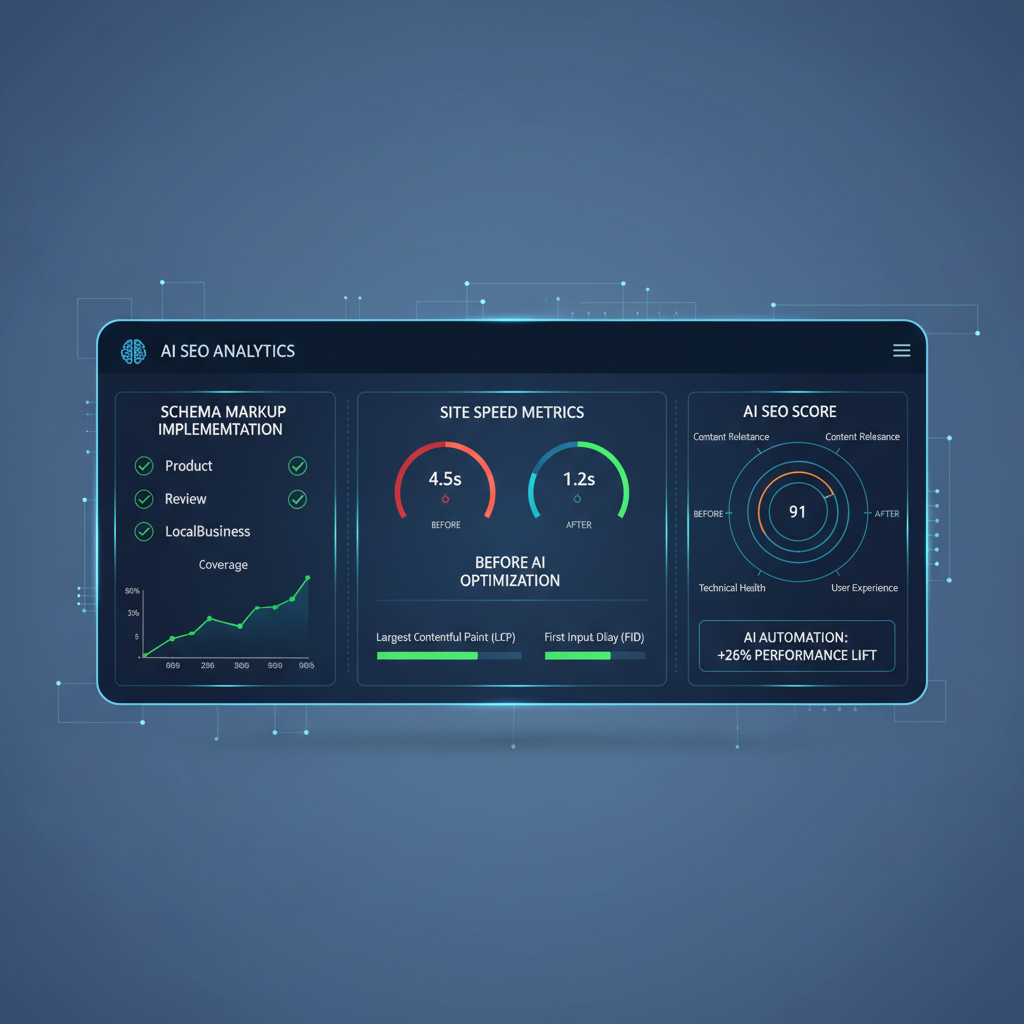
AI Search Engine Optimization Tools
AI search engine optimization represents the newest frontier in SEO automation, focusing specifically on visibility within ChatGPT, Claude, Perplexity, Gemini, and other AI-powered search platforms. These tools optimize content and technical elements to increase the likelihood of AI recommendations and citations.Generative Engine Optimization (GEO)
Generative Engine Optimization is the practice of optimizing content specifically for AI search engines that generate responses rather than displaying traditional search results. This approach requires different optimization strategies compared to traditional SEO. GEO optimization focuses on several key areas:- Citation Formatting: Structuring content to be easily cited and referenced by AI systems
- Authority Signals: Building credibility markers that AI engines use to evaluate source trustworthiness
- Context Optimization: Creating content that provides clear context and supporting information for AI understanding
- Question-Answer Formatting: Structuring content to directly answer common questions in your industry
- Entity Recognition: Optimizing for proper recognition of brands, products, and key concepts by AI systems
AI Search Visibility Tracking
Measuring performance across AI search engines requires specialized tracking tools that monitor mentions, citations, and recommendations across multiple AI platforms. Traditional SEO tools don't capture this data effectively, creating a need for AI-specific analytics.| AI Platform | Tracking Metrics | Optimization Focus | Update Frequency |
|---|---|---|---|
| ChatGPT | Citations, recommendations, context accuracy | Authority signals, structured data | Daily |
| Claude | Source attribution, factual accuracy | Citation formatting, credibility | Daily |
| Perplexity | Search result inclusion, source ranking | Content depth, technical optimization | Real-time |
| Gemini | Integration mentions, brand recognition | Entity optimization, context clarity | Weekly |
How to Choose the Right AI SEO Automation Platform
Selecting the optimal automated SEO platform requires careful evaluation of business needs, technical requirements, and growth objectives. The right choice depends on factors including budget, internal resources, optimization goals, and timeline expectations.Key Evaluation Criteria
When evaluating automated SEO platforms, focus on these critical factors that determine long-term success and ROI:- Automation Depth: How much of the SEO process can the platform handle without human intervention
- AI Search Coverage: Whether the platform optimizes for ChatGPT, Claude, Perplexity, Gemini, and other AI engines
- Content Quality: The sophistication of AI-generated content and brand voice consistency
- Technical Capabilities: Automated implementation of schema markup, structured data, and citation optimization
- Performance Tracking: Comprehensive analytics across traditional and AI search platforms
- Integration Options: Compatibility with existing content management systems and marketing tools
- Scalability: Ability to handle growth in content volume and optimization complexity
Budget and ROI Considerations
Automated SEO platforms range from $49 per month for basic content generation to $500+ monthly for comprehensive enterprise solutions. However, cost comparison should factor in the replacement value of manual SEO work and agency fees.Pro Tip: Calculate ROI based on time savings and performance improvements rather than just platform costs. Most businesses save 15-20 hours per week on SEO tasks while achieving better results than manual optimization.Traditional SEO agencies typically charge $3,000-$10,000 monthly for services that automated platforms can deliver at a fraction of the cost. The key difference is consistency – automated systems never miss optimization opportunities or forget to implement best practices that human teams might overlook. One limitation to consider is that automated platforms require some learning time to understand your business and optimize effectively. Most see significant improvements within 30-45 days, but peak performance often takes 2-3 months to achieve.
Implementation Best Practices for 2026
Successful automated SEO implementation requires strategic planning, proper configuration, and ongoing optimization to maximize results. The most effective deployments follow proven methodologies that balance automation efficiency with business-specific customization.Setup and Configuration Strategy
Proper platform setup is crucial for achieving optimal results from automated SEO. The configuration phase determines how effectively the system understands your business and optimization goals.- Business Profile Development: Provide comprehensive information about your industry, target audience, and competitive landscape
- Keyword Strategy Definition: Establish primary and secondary keyword targets with search volume and competition analysis
- Content Guidelines Setup: Define brand voice, tone, and messaging requirements for consistent AI-generated content
- Technical Integration: Connect the platform to your CMS, analytics tools, and existing marketing infrastructure
- Performance Baseline Establishment: Document current search rankings and traffic levels for accurate ROI measurement
Monitoring and Continuous Optimization
While automated SEO reduces manual work significantly, successful implementations require regular monitoring and strategic adjustments to maintain peak performance.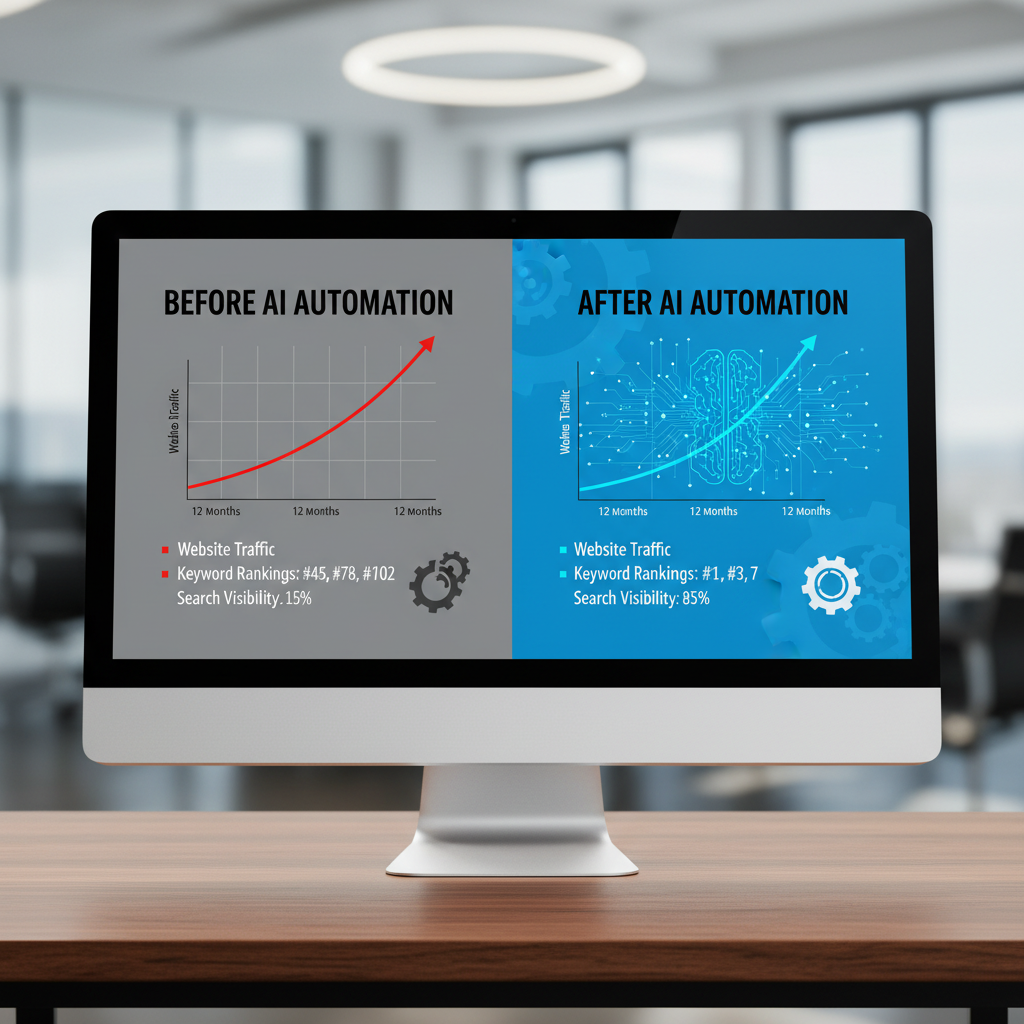
Sources & References
- University of California Riverside Library, "Leveraging AI to Automate SEO Strategy Adjustments During Algorithm Changes", 2026
- SCORE, "How to Use AI to Improve Your SEO Campaign", 2026
- Dan Sanchez, "Can You Automate SEO with AI? I Tested It for a Year", 2026
- SEOPress, "AI SEO Implementation Guide: 4-Step Workflow for WordPress", 2026
- Coursera, "AI SEO: Mastering Generative Engine Optimization (GEO)", 2026
- Marketer Milk, "13 Best SEO Automation Tools I'm Using in 2026", 2026
- Siteimprove, "AI SEO Tools: How to Use AI for Faster, Smarter Optimization", 2026
- Gumloop, "SEO Automation Made Simple with AI", 2026
Frequently Asked Questions
1. How much does AI SEO automation cost compared to traditional SEO agencies?
Understanding AI SEO automation is essential. Automated platforms typically cost $49-$500 per month, while traditional SEO agencies charge $3,000-$10,000 monthly. This represents an 85-95% cost reduction while often delivering comparable or better results due to consistency and 24/7 optimization.
2. Can automated SEO replace human SEO experts entirely?
Automated optimization handles tactical execution extremely well but benefits from human strategic oversight. The most successful implementations combine automated optimization with periodic human review for strategy adjustments and quality assurance. Complete replacement depends on business complexity and optimization goals.
3. How long does it take to see results from AI SEO automation?
Most businesses see initial improvements within 30-45 days of implementation, with significant results typically appearing within 2-3 months. AI search engine visibility often improves faster, sometimes within 3-6 weeks, as these platforms update their knowledge bases more frequently than traditional search engines.
4. Does automated SEO work for all types of businesses?
Automated optimization is particularly effective for content-driven businesses, e-commerce sites, SaaS companies, and service providers. Highly regulated industries or businesses requiring extensive human expertise may need more customization, but most SMBs see excellent results with standard automation platforms.
5. What's the difference between traditional SEO tools and automated SEO?
Traditional SEO tools provide data and recommendations that require human implementation. Automated platforms actually execute optimizations automatically, including content creation, technical implementation, and ongoing monitoring. They also optimize for AI search engines like ChatGPT and Claude, not just Google.
6. How do I measure ROI from automated SEO?
Track organic traffic growth, keyword ranking improvements, AI search citations, time savings, and cost reduction compared to manual SEO or agency fees. Most platforms provide comprehensive analytics covering both traditional and AI search performance. Calculate ROI by comparing results to previous manual efforts or agency costs.
7. Is AI-generated content good enough for SEO in 2026?
Yes, AI-generated content in 2026 often outperforms manually created content for SEO purposes. Modern AI systems understand context, maintain brand voice consistency, and optimize for both traditional and AI search engines simultaneously. The key is using platforms with sophisticated content generation capabilities and proper configuration.
8. Can automated SEO handle technical SEO requirements?
Advanced automated platforms automatically implement schema markup, optimize site structure, manage XML sitemaps, and handle citation formatting for AI search engines. They often execute technical optimizations more consistently than manual processes, reducing errors and ensuring comprehensive coverage across entire websites.
AI SEO automation has fundamentally transformed how businesses approach search optimization, delivering unprecedented efficiency and results at a fraction of traditional costs. As we've explored throughout this guide, the technology has matured to handle everything from content creation to technical implementation while optimizing for both traditional search engines and emerging AI platforms like ChatGPT, Claude, and Perplexity. The key to success lies in choosing the right platform for your specific needs and implementing it strategically. Whether you're a small business looking to compete with larger competitors or an established company seeking to scale your SEO efforts, automated optimization offers a path to consistent, measurable results without the overhead of traditional agencies.
Recommended Articles
Explore more from our content library:
- AI Search Visibility: Complete Guide to Tracking &
- Perplexity AI SEO: Complete 2026 Guide to AI Search
- Best Automated SEO Strategies for 2026
- How to Optimize for ChatGPT: Complete 2026 Guide
- AI SEO Tools Small Business: 12 Best Solutions for 2026
Ready to take your results to the next level? Discover what Moonrank can do for you and see why businesses trust us to deliver real, measurable outcomes.