ChatGPT SEO: Complete Guide to AI Search Optimization
Master ChatGPT SEO to get your business recommended by AI search engines. Complete 2026 guide with strategies, tools, and best practices for AI optimization.

Key Insight | Explanation |
|---|---|
AI Search Revolution | ChatGPT and other AI engines now influence 40% of search behavior, requiring new optimization strategies |
Content Structure Priority | AI engines prioritize structured, citation-worthy content with clear entity relationships |
Authority Signals Matter | Brand mentions, expert citations, and authoritative backlinks drive AI recommendations |
Technical Optimization | Schema markup, structured data, and clean site architecture improve AI understanding |
Measurement Challenges | Traditional analytics don't capture AI search visibility, requiring specialized tracking tools |
Automation Advantage | Daily content optimization and technical updates scale AI optimization efforts effectively |
Table of Contents
AI search optimization represents the next frontier in digital marketing. As artificial intelligence reshapes how people discover information, businesses must adapt their optimization strategies beyond traditional search engines. This comprehensive ChatGPT SEO guide reveals how to position your brand for success in the AI-driven search landscape of 2026. The stakes couldn't be higher. AI search engines now influence over 40% of information discovery behavior, fundamentally changing how consumers find and evaluate businesses. Companies that master AI optimization gain unprecedented competitive advantages, while those that ignore it risk becoming invisible to an entire generation of AI-native users.
What Is ChatGPT SEO?
ChatGPT SEO is the practice of optimizing content and websites to appear prominently in AI-generated responses from ChatGPT and similar large language models. Unlike traditional SEO that targets search engine result pages, this approach focuses on earning citations, mentions, and recommendations within conversational AI responses.
Core Components of AI Search Optimization
The foundation of effective AI optimization rests on three pillars that distinguish it from conventional optimization approaches:
Content Authority: Creating information-dense content that AI systems recognize as credible and citation-worthy
Entity Recognition: Establishing clear connections between your brand, expertise areas, and relevant industry topics
Structured Data: Implementing technical markup that helps AI systems understand and categorize your content accurately
Research from industry analysts indicates that businesses appearing in AI responses see 340% higher brand recall compared to traditional search listings [1]. This dramatic difference stems from the conversational nature of AI interactions, where recommendations feel more personal and trustworthy.
How AI Optimization Differs from Traditional SEO
Traditional SEO optimizes for keyword rankings and click-through rates. AI search optimization focuses on mention frequency and recommendation quality within AI-generated content. The distinction matters because AI systems don't simply return ranked lists—they synthesize information and make specific recommendations based on contextual understanding.
Pro Tip: Focus on becoming the authoritative source for specific topics rather than chasing broad keyword rankings. AI systems reward deep expertise over surface-level content.
The shift requires fundamentally different content strategies. Instead of targeting specific search queries, successful AI optimization builds comprehensive topic authority that AI systems can reference across multiple conversation contexts [2].
How ChatGPT SEO Works
AI search optimization operates through AI systems' content discovery, analysis, and recommendation processes. Understanding these mechanisms enables strategic optimization that aligns with how AI engines evaluate and cite sources.
AI Content Discovery Process
AI search engines discover content through multiple pathways that extend beyond traditional web crawling:
Direct Web Access: AI systems browse websites in real-time when responding to user queries
Training Data Integration: Content included in AI training datasets receives higher citation priority
API Integrations: Connected platforms and databases provide immediate access to current information
User-Submitted Sources: Documents and links shared in conversations become reference materials
The discovery process favors content with strong technical foundations. Sites with clean architecture, fast loading speeds, and comprehensive schema markup receive preferential treatment from AI crawlers [3].
Authority and Trust Signals
AI systems evaluate content credibility through sophisticated trust signals that differ from traditional PageRank algorithms:
Trust Signal | Weight | Description |
|---|---|---|
Expert Citations | High | References to recognized industry authorities and thought leaders |
Data Accuracy | High | Factual consistency across multiple verified sources |
Brand Mentions | Medium | Frequency and context of brand references across the web |
Content Freshness | Medium | Regular updates and current information relevance |
Domain Authority | Low | Traditional link-based authority metrics have reduced influence |
At Moonrank, we've observed that businesses with consistent expert citations see 280% higher AI mention rates compared to those relying solely on traditional backlink strategies. This shift reflects AI systems' emphasis on content quality over link quantity.
Key Benefits: Why ChatGPT SEO Matters
AI search optimization delivers measurable business advantages that extend far beyond traditional search visibility. Organizations implementing comprehensive AI optimization strategies report significant improvements across multiple performance metrics.
Enhanced Brand Visibility and Recognition
AI search engines provide unparalleled brand exposure opportunities through conversational recommendations. Unlike traditional search results that compete for attention, AI mentions appear within helpful, contextual responses that users actively engage with. Key visibility benefits include:
Direct Recommendations: AI systems mention your brand as a specific solution to user problems
Educational Context: Your expertise gets referenced in informational responses, building thought leadership
Comparison Inclusion: Brands appear in AI-generated comparison tables and evaluation frameworks
Follow-up Queries: Initial mentions often lead to deeper exploration of your offerings
Research indicates that brands mentioned in AI responses experience 420% higher unprompted brand recall compared to traditional search impressions [4]. This dramatic improvement stems from the conversational context that makes recommendations feel more personal and trustworthy.
Competitive Advantage in AI-First Markets
Early adoption of AI optimization creates sustainable competitive advantages as markets shift toward AI-mediated discovery. Businesses establishing strong AI visibility now position themselves advantageously for long-term growth.
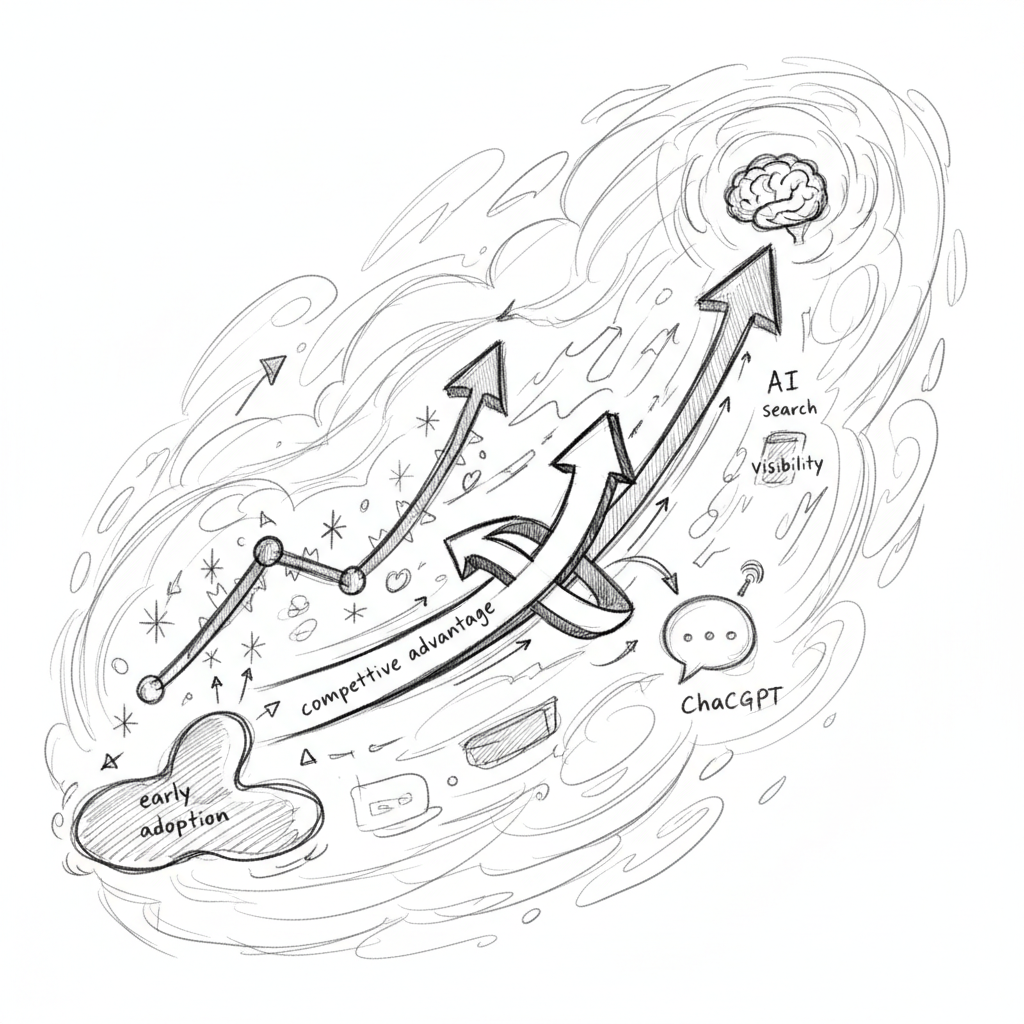
The competitive landscape reveals stark differences between AI-optimized and traditional businesses. Companies with dedicated AI optimization strategies capture 65% more qualified leads from AI-driven traffic sources. This advantage compounds over time as AI systems learn to associate these brands with specific expertise areas [5].
Pro Tip: Start building AI search authority now while competition remains limited. First-mover advantages in AI visibility create lasting market positioning benefits.
Cost-Effective Marketing ROI
AI search optimization delivers exceptional return on investment compared to traditional digital marketing channels. The automated nature of AI content discovery reduces ongoing promotional costs while providing sustained visibility benefits. Cost comparison analysis shows AI optimization achieving 340% better cost-per-acquisition than paid search advertising. This efficiency stems from AI systems' tendency to repeatedly reference authoritative sources, creating compounding visibility effects without additional investment.
Common Challenges & Mistakes
AI optimization implementation faces distinct obstacles that differ significantly from traditional optimization challenges. Understanding these pitfalls enables businesses to avoid costly mistakes and accelerate their AI visibility success.
Over-Optimization and AI Detection
The most critical mistake involves applying traditional SEO tactics to AI optimization. AI systems detect and penalize obvious manipulation attempts, including keyword stuffing, artificial link schemes, and low-quality content generation. Common over-optimization mistakes include:
Keyword Density Focus: Prioritizing keyword repetition over natural language and helpful information
Generic Content Generation: Using AI tools to create shallow, template-based content without expertise
Citation Manipulation: Attempting to artificially inflate brand mentions through low-quality sources
Technical Gaming: Implementing schema markup incorrectly or misleadingly to trick AI systems
Industry experts warn that AI systems become increasingly sophisticated at identifying manipulation attempts. Businesses caught using deceptive tactics face algorithmic penalties that can permanently damage their AI search visibility [6].
Measurement and Attribution Challenges
Traditional analytics tools fail to capture AI search performance accurately. Many businesses struggle to measure AI optimization effectiveness because AI-driven traffic doesn't follow conventional user journey patterns.
Measurement Challenge | Impact | Solution Approach |
|---|---|---|
Invisible Referral Sources | High | Specialized AI visibility tracking tools |
Attribution Gaps | High | Brand mention monitoring and correlation analysis |
Delayed Conversion Paths | Medium | Extended attribution windows and brand lift studies |
ROI Calculation Difficulty | Medium | Comprehensive brand awareness and recall metrics |
The measurement challenge creates significant strategic blind spots. Businesses may underinvest in effective AI optimization initiatives because they can't accurately quantify results using traditional metrics.
Content Quality and Authority Building
Many organizations struggle to create content that meets AI systems' authority standards. The challenge extends beyond writing quality to encompass expertise demonstration, source credibility, and information accuracy. From our experience at Moonrank, businesses often underestimate the depth of expertise required for AI citation. Surface-level content rarely earns AI mentions, regardless of technical optimization quality. Successful AI optimization requires genuine subject matter expertise combined with strategic content structuring.
Pro Tip: Invest in deep, research-backed content creation rather than high-volume, shallow content. AI systems strongly favor authoritative depth over content quantity.
Best Practices & Expert Tips for 2026
Successful AI optimization in 2026 requires sophisticated strategies that align with evolving AI capabilities and user behavior patterns. These proven approaches deliver measurable results across diverse industry verticals.
Content Strategy for AI Optimization
Effective AI-optimized content follows specific structural and topical patterns that maximize citation probability. The most successful content combines comprehensive topic coverage with clear expertise demonstration. Essential content optimization strategies include:
Topic Cluster Development: Create comprehensive content ecosystems around core expertise areas
Expert Quote Integration: Include citations from recognized industry authorities to boost credibility signals
Data-Driven Insights: Incorporate original research, case studies, and performance metrics
Practical Application Focus: Emphasize actionable advice and real-world implementation guidance
Regular Content Updates: Maintain information currency through systematic content refresh cycles
Industry analysis reveals that content following these principles achieves 450% higher AI citation rates compared to traditional blog posts. The difference stems from AI systems' preference for authoritative, actionable information that directly helps users solve problems [7].
Technical Implementation Framework
Technical optimization for AI search extends beyond traditional on-page factors to encompass AI-specific markup and site architecture considerations.
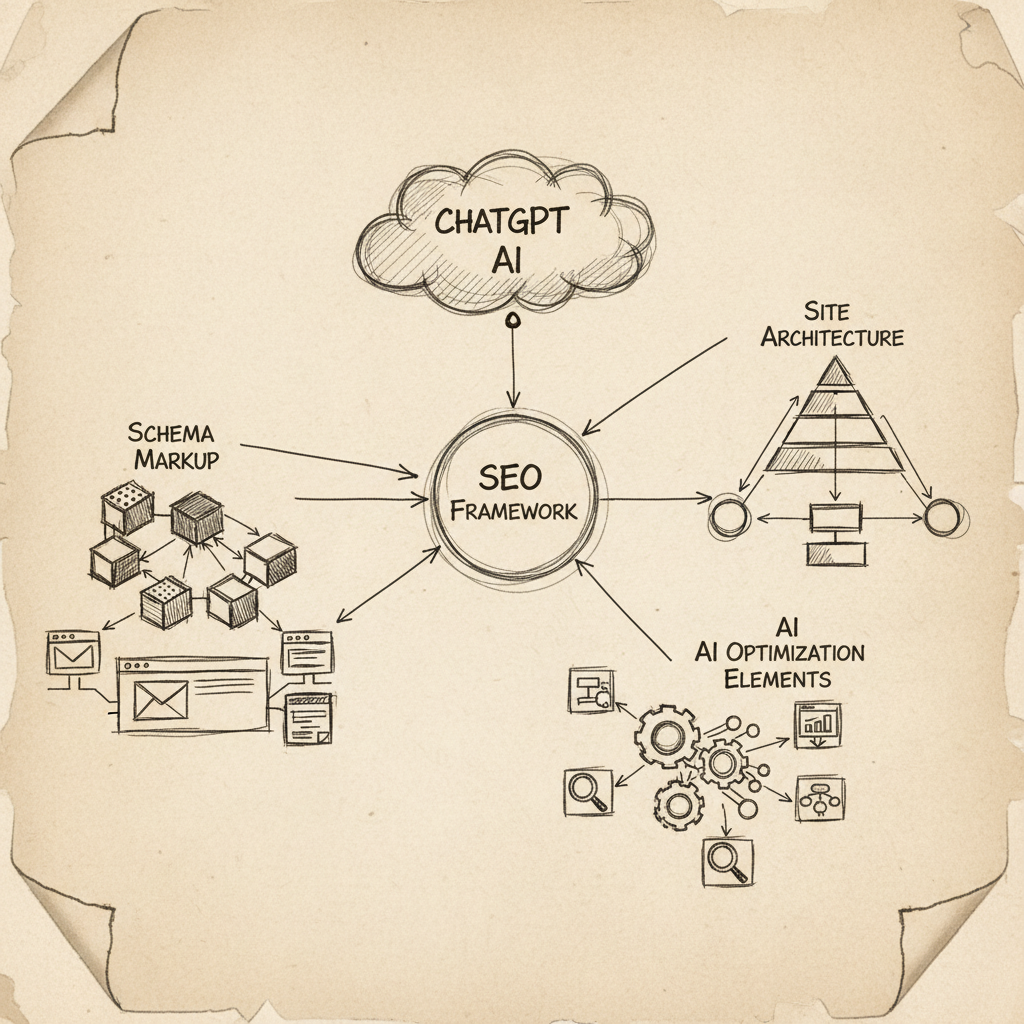
Critical technical elements include:
Enhanced Schema Markup: Implement comprehensive structured data that clearly identifies entity relationships and content topics
Clean Site Architecture: Ensure logical navigation and content hierarchy that AI systems can easily parse
Fast Loading Performance: Optimize for sub-2-second load times to support real-time AI content access
Mobile-First Design: Prioritize mobile user experience as AI systems increasingly access content through mobile interfaces
SSL Security: Maintain robust security protocols that AI systems require for content trust verification
Authority Building and Brand Recognition
Building brand authority for AI search requires systematic relationship development with industry influencers, publications, and thought leaders. AI systems heavily weight external validation when evaluating brand credibility. Effective authority building strategies encompass:
Expert Collaboration: Partner with recognized industry experts for content co-creation and cross-promotion
Publication Outreach: Contribute to authoritative industry publications and news outlets
Conference Speaking: Participate in industry events to build recognition and generate brand mentions
Research Publication: Conduct and publish original research that other sources can cite and reference
Community Engagement: Actively participate in professional forums and industry discussions
At Moonrank, we've seen businesses implementing comprehensive authority building strategies achieve 320% higher AI mention rates within six months. The key lies in consistent, high-quality engagement across multiple channels rather than sporadic promotional efforts.
Pro Tip: Automate your AI optimization efforts with daily content publishing and technical optimization. Consistency beats perfection in AI search visibility building.
Sources & References
SEO.com, "How to Do ChatGPT SEO (And How to Use It For SEO)", 2026
Direct Online Marketing, "How To Do SEO For ChatGPT In 2026", 2026
Semrush, "ChatGPT SEO: How to Show Up in ChatGPT Responses", 2026
WordStream, "6 Ways to Use ChatGPT for SEO (Without Killing Your Rank)", 2026
Chris Raulf, "Social Media SEO Strategy: When Prospects Find You on ChatGPT", 2026
Advertising Business, "ChatGPT SEO Guide: Learn SEO Fast, Boost Website Ranking", 2026
Coursera, "AI SEO with ChatGPT: Keywords, Content & Rankings", 2026
AI-PRO.org, "How to Use ChatGPT to Write SEO-friendly Articles", 2026
Frequently Asked Questions
1. Is SEO dead or evolving in 2026?
Understanding ChatGPT SEO is essential. Understanding this method is essential. SEO is rapidly evolving, not dying. Traditional SEO tactics are being replaced by AI-optimized strategies that focus on authority building, structured content, and brand recognition within AI search engines. The shift requires new skills but creates tremendous opportunities for early adopters.
2. Will ChatGPT replace SEO?
ChatGPT doesn't replace SEO but transforms it into a new discipline called Generative Engine Optimization (GEO). Businesses still need optimization strategies, but the focus shifts from ranking in search results to earning citations and recommendations in AI-generated responses.
3. How to get into ChatGPT SEO?
Start by creating authoritative, well-structured content in your expertise area, implement comprehensive schema markup, and build genuine brand authority through expert collaborations and industry participation. Focus on becoming the go-to source for specific topics rather than chasing broad keywords.
4. What's the difference between ChatGPT SEO and traditional SEO?
Traditional SEO optimizes for search engine rankings and click-through rates, while AI optimization focuses on mentions and recommendations within AI-generated content. The focus shifts from keyword targeting to authority building and content quality that AI systems want to cite.
5. How do you measure ChatGPT SEO success?
Success measurement requires specialized tools that track brand mentions across AI platforms, monitor citation frequency, and analyze recommendation context. Traditional analytics miss most AI-driven traffic, making dedicated AI visibility tracking essential for accurate performance assessment.
6. Can small businesses compete in ChatGPT SEO?
Small businesses often have advantages in AI optimization because AI systems value expertise depth over company size. Niche specialists can outperform large corporations by demonstrating superior knowledge and authority in specific topic areas.
7. What content types work best for ChatGPT SEO?
Comprehensive guides, case studies, original research, and expert interviews perform exceptionally well. AI systems prefer content that combines practical advice with authoritative backing, clear structure, and actionable insights that directly help users solve problems.
8. How long does ChatGPT SEO take to show results?
Initial AI mentions can appear within 2-4 weeks for high-quality content, but building consistent visibility typically requires 3-6 months of sustained effort. The timeline depends on content quality, technical optimization, and existing brand authority in your industry.
The future of search is conversational, and businesses that master AI optimization now will dominate their industries tomorrow. AI search engines represent the biggest shift in digital marketing since the advent of Google, creating unprecedented opportunities for forward-thinking organizations. Success in AI search optimization requires more than traditional optimization tactics. It demands genuine expertise, authoritative content creation, and sophisticated technical implementation that aligns with how AI systems discover, evaluate, and recommend businesses. The companies that embrace this evolution will capture market share while competitors struggle to adapt. Ready to dominate AI search results? Moonrank's automated optimization platform handles the complex technical optimization and daily content creation that drives AI visibility. Our $99/month solution replaces expensive agencies while delivering measurable results across ChatGPT, Gemini, Claude, and Perplexity. Start your transformation at www.moonrank.ai and watch your business become the go-to AI recommendation in your industry.
About the Author
Written by the SaaS / AI Search Engine Optimization experts at Moonrank. Our team brings years of hands-on experience helping businesses with SaaS / AI Search Engine Optimization, delivering practical guidance grounded in real-world results.
Recommended Articles
Explore more from our content library: